Phonics Worksheets for Kids
Build early reading skills with worksheets that change every time you generate them.
Free phonics worksheet generators
Beginning Sounds
Picture questions: which picture starts with B?
Missing Letters
Fill in the missing letters of the alphabet.
CVC Words
Short a, e, i, o, u: reading, matching and word families.
Syllable Counting
Clap and count 1 to 4 syllables with pictures.
Alphabetical Order
Put letters or words in ABC order.
Ready-made worksheets
- Beginning Sounds A-Z worksheets – One picture question for every letter of the alphabet.
- Beginning Sounds for Preschool worksheets – Six easy questions with eight clear letters.
- Beginning Sounds for Kindergarten worksheets – Ten mixed questions with all 26 letters.
Free printable workbooks
Ready-made PDF books on the same skill, to print in a planned order.
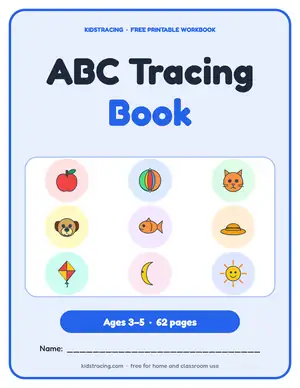
ABC Tracing Book
Every letter A to Z with numbered stroke arrows, a picture to color and a word to trace.
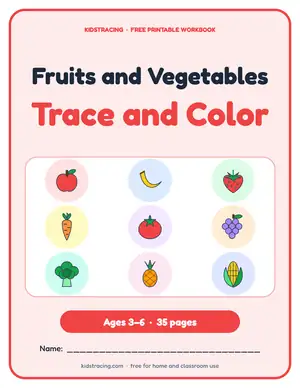
Fruits and Vegetables Tracing and Coloring Book
Color 26 fruits and vegetables, trace each word and write it alone, then review with matching games.
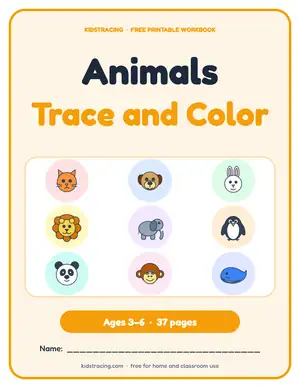
Animals Tracing and Coloring Book
Color 28 animals from the farm, the garden and the wild, trace each name and write it alone.
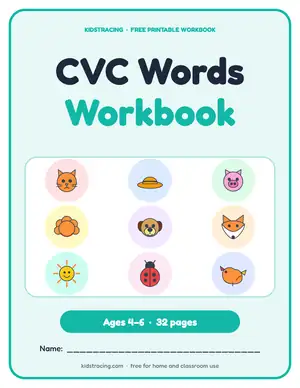
CVC Words Workbook
Read, build, trace and write short a, e, i, o and u words with pictures, sound boxes and sentences.
How phonics skills build
Early reading grows step by step. Children first learn to hear the sounds in spoken words, then connect them to letters, then blend them into words. Beginning sounds links the first sound of a word to its letter. Missing letters and alphabetical order build confidence with the alphabet itself. CVC words let children blend three sounds into real words, and syllable counting trains them to hear the beats inside longer words.
How the worksheets work
Every phonics tool creates a new set of questions each time you press Generate new worksheet, so one tool can produce weeks of practice. Each worksheet can include a separate answer key page, which you can print on its own for the teacher or parent. Questions use original simple pictures and common words suited to children aged four to seven.
Where to start
Most children begin with beginning sounds and the alphabet, move to CVC words with short a, then add the other short vowels. Syllable counting and alphabetical order fit in once children can read a few simple words.
Phonics words in plain language
- A phoneme is a single sound, such as /b/ or /sh/.
- A grapheme is the letter or letters that spell a sound.
- Blending means pushing sounds together to read a word: /c/ /a/ /t/ makes cat.
- Segmenting means pulling a word apart into its sounds to spell it.
Keep it playful
Phonics works best in short, cheerful sessions. Say the sound, not the letter name, point to the picture and let your child guess. If an activity feels too hard, switch to an easier level and come back later.
Browse by age: Preschool Worksheets · Kindergarten Worksheets
Frequently asked questions
At what age should children start phonics?
Playing with sounds, such as rhymes and first sounds, can start at three or four. Formal phonics usually begins in kindergarten or Reception, at about age five. In England, children take a short phonics check in Year 1.
Do the phonics worksheets include answer keys?
Yes. Every phonics tool can add a separate answer key page, which you can print on its own.
Should my child learn letter names or letter sounds first?
Both help. Most phonics programs teach the sounds alongside the letter shapes, and the letter names follow naturally through songs, books and everyday use.
How do I know if a worksheet is too hard?
If your child gets many answers wrong or loses interest, move to an easier level or choose fewer letters. When most answers are right, try a harder level.